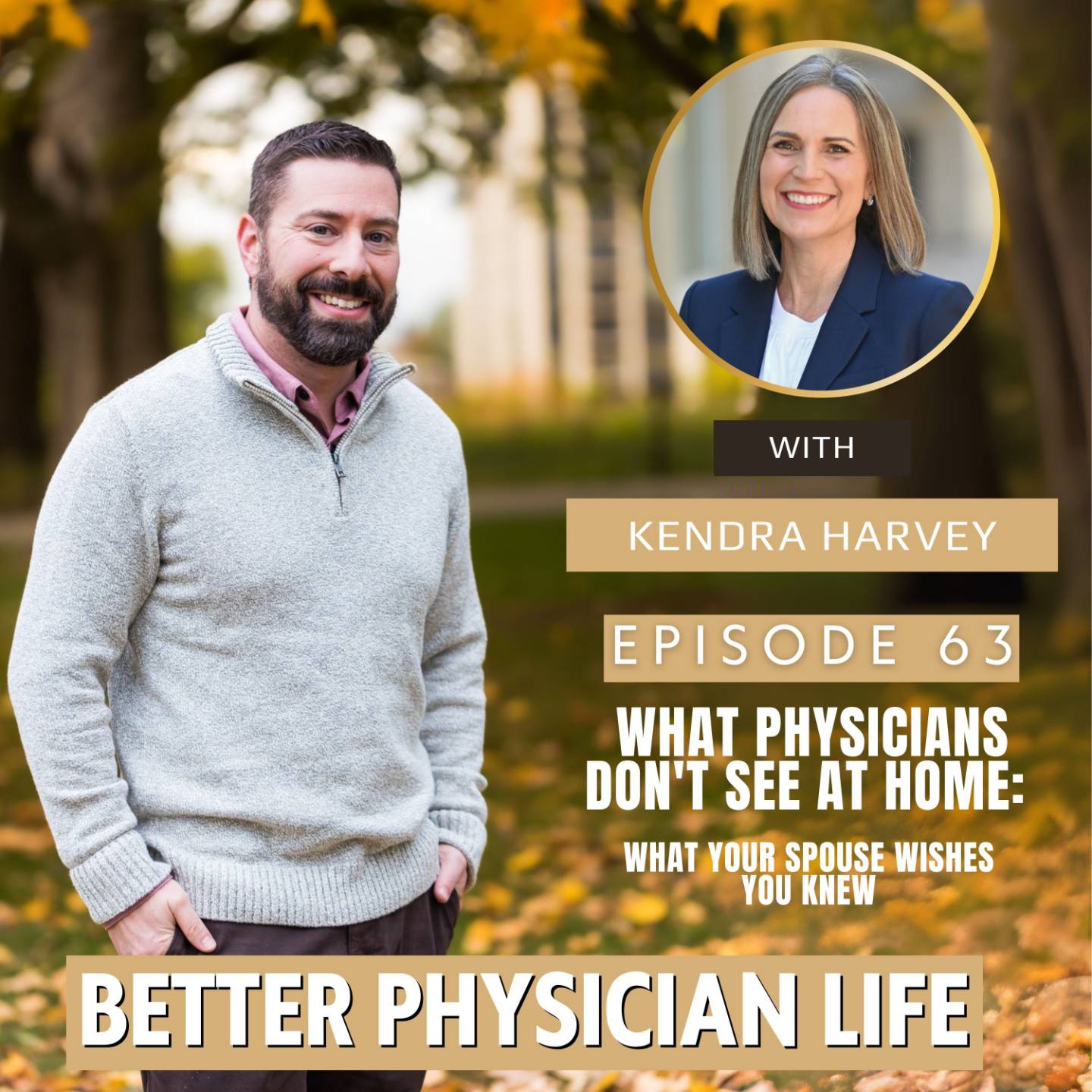
What Physicians Don't See at Home: What Your Spouse Wishes You Knew with Kendra Harvey | Ep63
We talk a lot about what medicine costs physicians: burnout, call, inbox volume, and the constant interruptions. We spend far less time talking about what the career asks of the people who live on the other side of the pager.
In this episode of Better Physician Life, Dr. Michael Hersh sits down with Kendra Harvey, a physician spouse of more than two decades, mother of five, and host of the Supporting Physician Spouses podcast. Together they explore the hidden load carried by spouses: the nights, weekends, and plans that shift without warning; the identity changes that happen during training and early practice; and the quiet resentment that builds when conversations never find a place on the calendar.
Kendra challenges the common advice to “have no expectations” and instead offers a more nuanced approach, lowering some expectations while fiercely protecting the ones that keep a marriage connected. She shares practical frameworks, including the 2-2-2 rule for intentional time together, the difference between parent-centered and family-centered homes, and the small, consistent actions physicians can take to make life meaningfully better for their partners.
This conversation is not about blame. It is about seeing the full picture of what this career requires and choosing, with intention, to do more for the marriage than most people do for theirs.
About the Show:
Created for physicians who want more than clinical competence, Better Physician Life is a space for honest reflection, reinvention, and reclaiming purpose beyond the pager.
Hosted by Dr. Michael Hersh, each episode dives into the questions we didn’t learn to ask in training, offering tools and conversations to help you live and lead with intention.
Three Actionable Takeaways:
-
Create a Regular Cadence for Connection: There is rarely a perfect time for hard or meaningful conversations. Schedule recurring check-ins (just like you honor the call schedule) so you address issues before they compound into resentment.
- Lower Some Expectations, Protect Others: Unspoken or unrealistic expectations (e.g., dinner together five nights a week) create disappointment. Clear, negotiated expectations around communication, kindness, and presence protect the relationship. Make the implicit explicit.
- Build a Family-Centered Home: Shift from a parent-centered (or kid-centered) dynamic to one where every member of the family has protected time, resources, and consideration. Small adjustments to the calendar and budget can create meaningful space for the non-physician spouse.
Watch Now