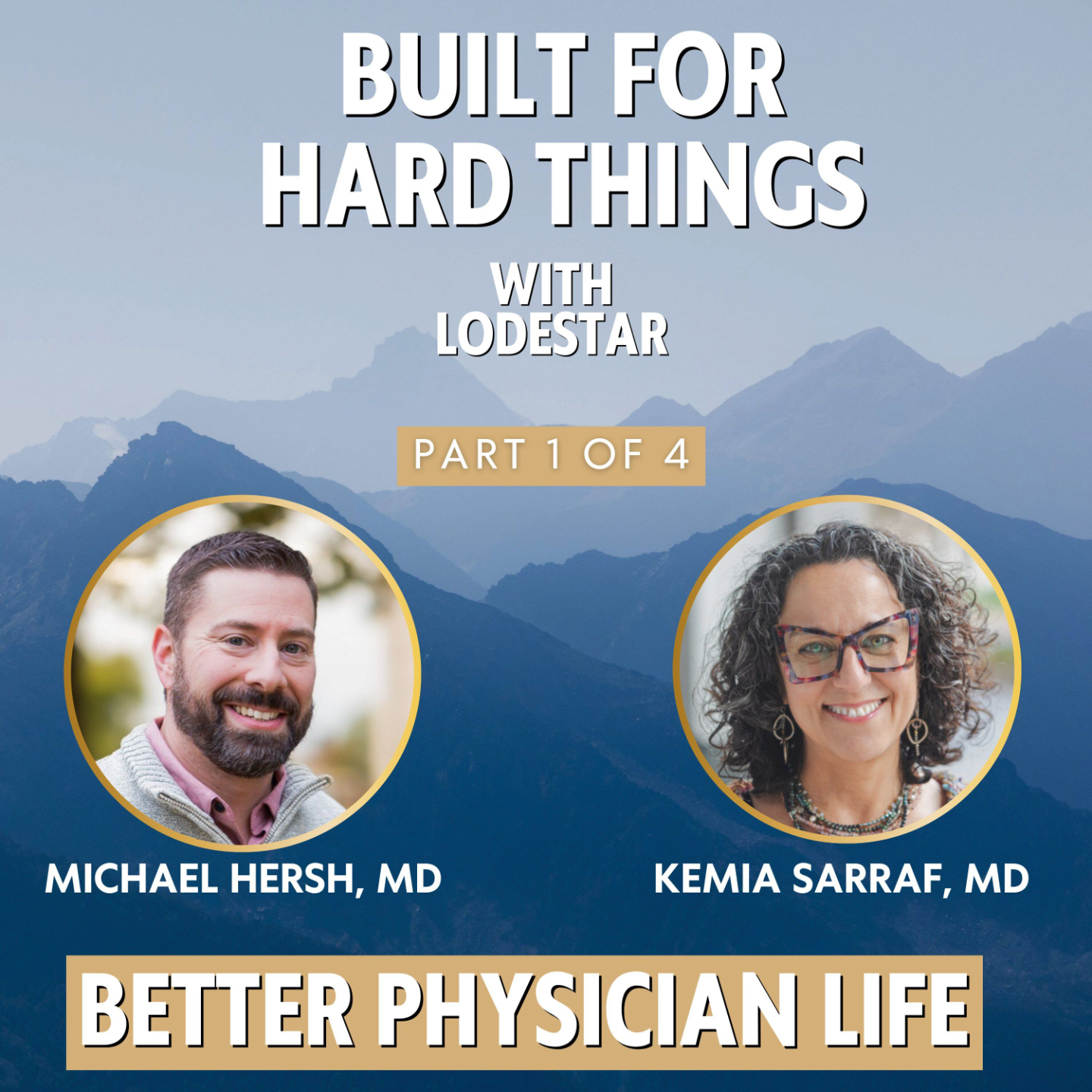
Why Soft Skills Are Not Soft: The Hidden Foundation of High-Performing Teams | Ep53
Why do talented teams sometimes struggle despite having highly skilled members?
In this episode of Better Physician Life, Dr. Michael Hersh welcomes back Dr. Kemia Sarraf, founder of Lodestar Consulting and Executive Coaching, for the first of a four-part series exploring the hidden drivers beneath burnout, leadership, and team culture. Together, they challenge the notion that trust, safety, and connection are merely "soft skills" and instead present compelling evidence that these elements are foundational to high-performing teams.
Drawing on neurophysiology, leadership research, trauma responsiveness, and experience working with physicians, military personnel, educators, attorneys, and law enforcement professionals, Dr. Sarraf explains why tending to the nervous system is essential to helping teams perform under pressure. They discuss psychological safety, Google's Project Aristotle findings, the four pillars of trust, trust wobbles, repairing ruptures, leadership vulnerability, and why trust can be built much faster than most people realize.
This conversation offers practical insights for leaders seeking to create healthier teams, improve communication, and return to the kind of meaningful work that first inspired them to enter medicine.
About the Show:
Created for physicians who want more than clinical competence, Better Physician Life is a space for honest reflection, reinvention, and reclaiming purpose beyond the pager.
Hosted by Dr. Michael Hersh, each episode dives into the questions we didn’t learn to ask in training, offering tools and conversations to help you live and lead with intention.
Top 3 Takeaways:
-
Build Trust Intentionally: Trust grows from four pillars: these are authenticity, reliability, compassion, and competence. Identifying your own "trust wobble" helps you strengthen relationships and lead more effectively.
- Lead Through Nervous System Awareness: High-performing teams thrive when leaders intentionally create cues of safety that reduce stress and allow team members to think, collaborate, and perform at their best.
- Repair Ruptures Transparently: When trust is broken, acknowledge the impact, invite feedback, and communicate how you plan to move forward differently. Honest repair strengthens relationships over time.
Watch Now